"Wild-caught Alaskan salmon" is one of the most-searched phrases in seafood, and one of the loosest-used labels on packaging. Here is what it actually means, and what separates the real thing from marketing - from a family that catches it for a living.
What "wild-caught Alaskan" actually means
Wild-caught means the fish lived its whole life in open water, eating what salmon eat, swimming what salmon swim - not raised in a pen. Alaskan means it came out of some of the most intact cold-water fisheries left anywhere, managed under Alaska's constitutional mandate for sustainable yield. Together, the words describe a fish with firmer texture, deeper natural color and leaner, cleaner flavor than farmed alternatives.
Why the catch method matters as much as the label
Two boats can both sell "wild-caught Alaskan salmon" and deliver very different fish. Net-caught salmon come up in volume, pressed together, and are processed in bulk. Line-caught salmon come up one at a time - each fish handled individually, bled and processed within minutes rather than hours. That single difference shows up on your plate as cleaner flavor and better texture. It also keeps bycatch to a minimum, because a hook takes one fish where a net takes whatever swims into it. Our whole operation - and our name - is built on this method.
The freezing question, answered backwards
Most buyers assume "fresh, never frozen" is the premium option. In salmon it is usually the opposite. The "fresh" fillet at a grocery counter may be a week from the water; a properly handled wild salmon is pressure bled, vacuum sealed and flash frozen within hours of the catch, which stops the clock at its best moment. Open the vacuum seal, thaw it overnight in the refrigerator, and you are eating the fish the way it left Alaska.
Alaskan wild caught salmon vs farmed: what actually differs
Four things, and none of them are marketing. Diet: wild salmon eat krill, herring and other forage, which is where their deep color comes from, while farmed salmon eat formulated feed. Fat: a fish that swims for its living is leaner and firmer; a farmed fish is fattier and softer, which is why farmed fillets are more forgiving and wild fillets cook faster. Texture: wild flesh is denser and holds its shape on the grill. Handling: a line-caught wild fish is bled and chilled as an individual fish, where farmed salmon is harvested and processed on a schedule. Cooked side by side, the difference is not subtle.
Knowing your species
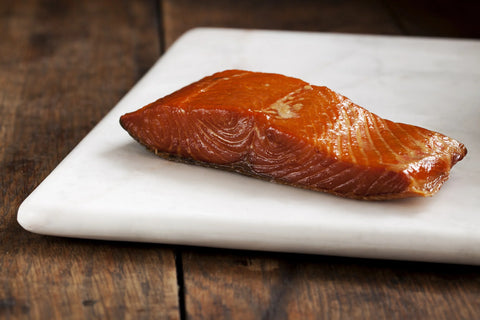
Alaska's wild salmon come in five species; the three you will most often see sold are king (chinook) - the largest and fattiest; sockeye - deep red, robust flavor; and coho (silver) - the balance point: medium richness, firm texture, versatile enough for grilling, roasting or curing. Coho is the species our fleet brings in - fresh, small-batch smoked, and as smoked salmon spread.
What to check before you buy - anywhere

Five questions sort real quality from label-ware: (1) Is the species named, or does it just say "salmon"? (2) Is it wild-caught or farmed? (3) How was it caught - line or net? (4) How was it processed - flash frozen at the source, or "refreshed"? (5) Can the seller tell you who caught it? If a listing cannot answer those, the label is doing the work the fish should.
How it arrives and how to treat it
Our salmon ships frozen and vacuum sealed. Open or remove the vacuum seal, thaw overnight in the refrigerator - never on the counter - and cook within a day or two. If you want somewhere to start, the recipe blog has methods written for exactly these fish, from grilled black cod technique that transfers directly to smoked salmon crostini.
Is Alaskan wild caught salmon better than farmed?
They are different fish. Wild salmon eat a natural diet and swim their whole lives, which shows in leaner meat, firmer texture and deeper flavor. Farmed salmon is fattier and milder. If flavor, texture and sourcing transparency drive your buying, wild is the answer.
Why does wild Alaskan salmon cost more?
One fish at a time is slow fishing. You are paying for the method, the handling, and a fishery managed to still be here in fifty years.
Where can I buy it?
Right here, direct from our family fleet - or at our California farmers markets if you want to taste first.