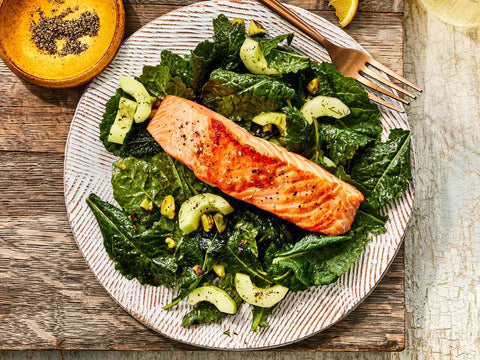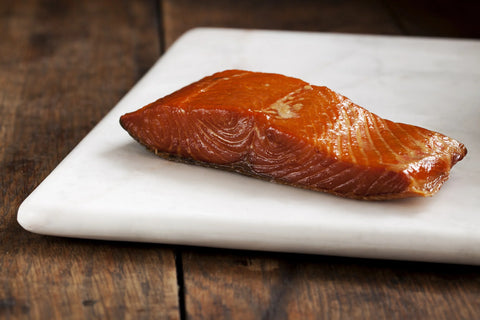
Coho and sockeye are both wild Pacific salmon, and most of what you'll find comes from Alaska. Sockeye is the deep red one: a firm, bold, rich "salmon" flavor. Coho (also called silver salmon) is orange-red and milder, with a tender, larger flake. Pick sockeye if you want big flavor, and coho if you want a versatile fish that pleases a whole table.
We should say up front: we're a fishing family, and coho is the fish we catch, one at a time on a hook and line. So we have a favorite. But both are great fish, and here's the honest comparison.
Quick comparison
| Coho (silver) | Sockeye (red) | |
|---|---|---|
| Color | Orange-red | Deep red, the reddest salmon |
| Flavor | Mild, clean, delicate | Bold, rich, pronounced |
| Texture | Firm but tender, larger flake | Firm and dense, tighter flake |
| Fillet | Usually thicker (coho tend to run larger) | Usually thinner, cooks faster |
| Best for | Roasting, grilling, smoking, first-time salmon eaters | Grilling, searing, cedar plank, bold sauces |
| Typical catch method | Nets and hook-and-line trolling | Mostly nets |
Meet the two fish
Coho salmon (Oncorhynchus kisutch) goes by "silver salmon" because of its bright silver skin in the ocean. It returns to Alaska's rivers in late summer and into fall, later than most other salmon.
Sockeye salmon (Oncorhynchus nerka) goes by "red salmon," for the deep red of its flesh. Sockeye return in huge runs in early to mid summer. Alaska's Bristol Bay has the largest sockeye run in the world.
Both are among Alaska's five wild salmon species, alongside king (chinook), keta (chum) and pink.
Taste and texture
This is the difference most people notice first.
Sockeye tastes like the word "salmon" turned up. It has a bold, rich flavor and a firm, dense bite. People who already love salmon often love sockeye.
Coho is milder and cleaner. It's delicate enough for people who say they "don't like fish," with a firm but tender texture and a larger flake. It takes on marinades, glazes and smoke well without getting lost.
Neither is "better." It depends on what you want on the plate.
Why is sockeye so red?
Color comes from diet. Salmon get their color from astaxanthin, a natural pigment found in the krill and other small crustaceans they eat. Sockeye feed heavily on this kind of plankton, which gives them the deepest red flesh of any salmon. Coho eat more small fish as they grow, and land at a rich orange-red.
That natural color is one reason wild salmon looks so different from farmed salmon, which gets its color from pigment added to its feed.
Nutrition: closer than you'd think
Both coho and sockeye are excellent sources of protein and omega-3 fatty acids. They're leaner than king salmon, and much closer to each other than the internet arguments suggest. The differences between the two are small and vary fish to fish and season to season. If you're choosing between them, choose on flavor and how you plan to cook it.
How each one is caught (the part nobody talks about)
Here's where our perspective comes in, because the catch method matters as much as the species.
Sockeye arrive in enormous, tightly packed runs, so most sockeye are caught with nets. In Bristol Bay that means gillnets. Nets are efficient, but the fish come up in volume and are handled in bulk.
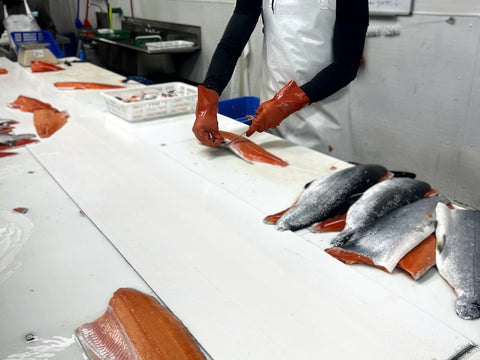
Coho is one of the few salmon also caught commercially by trolling: a hook and a line, one fish at a time. That's how we fish. Each coho comes aboard individually, is bled right away, and is processed and flash-frozen within hours. A fish handled that way keeps its firm texture and clean flavor all the way to your kitchen.
So when you're shopping for wild-caught Alaskan salmon, the species is only half the question. The other half is: how was it caught, and how fast was it frozen? (Our buyer's guide to wild-caught Alaskan salmon covers the five questions to ask any seller.)
How to cook coho vs. sockeye
Both are lean, so the number-one rule is the same: don't overcook it. Pull the fish when it turns opaque and just begins to flake. The FDA's safe temperature for fish is 145°F.
Cooking coho:
- Roast at 425°F with oil, salt and lemon for about 10 to 12 minutes, depending on thickness.
- Grill or pan-sear skin-side down, then flip once.
- Smoke it. Coho's mild flavor takes smoke beautifully. It's the fish we use for our smoked coho.
Cooking sockeye:
- Sear or grill hot and fast. Thinner fillets cook in just a few minutes.
- Cedar plank it, where the bold flavor stands up to the wood.
- Pair it with strong flavors: miso, soy, chili, mustard.
So which should you buy?
- Buy sockeye if you already love a strong salmon flavor, or you're grilling with bold sauces.
- Buy coho if you're feeding a mixed table, cooking for kids or salmon skeptics, roasting a weeknight dinner, or want one fish that does a bit of everything.
- Either way, buy wild. Look for "wild-caught Alaskan" on the label, and ask how it was caught and how it was frozen.
We catch coho because we think it's the most versatile fish in the ocean, and because trolling for it one at a time is how we like to fish. If you want to taste the difference line-caught makes, our wild coho is flash-frozen within hours of the catch and ships straight from our family. Browse all of our wild-caught Alaskan salmon.
Frequently asked questions
Is coho or sockeye salmon better?
Neither is better overall; they're different. Sockeye has a bolder, richer flavor and deep red color. Coho is milder, more tender and more versatile. Choose sockeye for big salmon flavor and coho for a crowd-pleaser.
Which salmon is mildest, coho or sockeye?
Coho is the milder of the two. Its clean, delicate flavor makes it a good choice for people who are new to salmon or say they don't like "fishy" fish.
Why is sockeye salmon so red?
Sockeye eat a lot of krill and other plankton rich in astaxanthin, a natural pigment. That diet gives them the deepest red flesh of any salmon.
Is coho salmon ever farmed?
Yes. Some coho is farmed, mostly outside the US, so check the label. Alaskan wild-caught salmon, coho or sockeye, is never farmed; commercial salmon farming is prohibited in Alaska.
What's the difference between coho, sockeye and king salmon?
King (chinook) is the largest and fattiest, with a buttery texture. Sockeye is deep red, firm and bold. Coho sits in between: medium richness, mild flavor and a firm, tender texture.