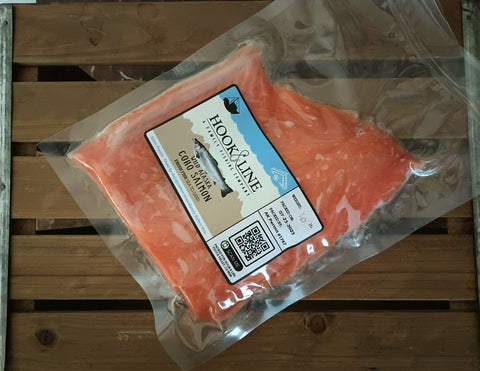
The best way to thaw frozen salmon is overnight in the refrigerator, after opening or removing the vacuum seal. Need it faster? Keep it sealed and submerge it in cold water; a 1-pound fillet usually thaws in under an hour. Short on time entirely? You can cook salmon straight from frozen. It just takes about 50% longer. Never thaw it on the counter.
We freeze our wild-caught Alaskan coho on the boat within hours of catching it, so how it's thawed is the last step between our dock and your dinner. Here's how to do it right.
Quick guide
| Method | Time for a 1 lb fillet | Vacuum seal | Cook when? |
|---|---|---|---|
| Refrigerator (best) | Overnight, 8 to 12 hours | Open or remove it first | Within 1 to 2 days |
| Cold water (fast) | About 30 to 60 minutes | Keep it sealed | Right away |
| Microwave (last resort) | A few minutes on defrost | Remove it first | Right away |
| Cook from frozen | No thawing | Remove it | Add about 50% to the cook time |
Method 1: In the refrigerator (the best way)
This is the gentlest method and gives you the best texture.
- Open the vacuum seal, or take the fish out and put it on a plate. (Why? See "The vacuum-seal rule" below.)
- Set it on a plate or in a shallow dish on the bottom shelf, so no drips reach other food.
- Leave it overnight. A 1-pound fillet usually thaws in 8 to 12 hours; thicker pieces can take longer.
- Cook it within a day or two of thawing.
Plan it the night before: move tomorrow's dinner from the freezer to the fridge when you clean up after tonight's.
Method 2: In cold water (the fast way)
For when you forgot to plan ahead.
- Keep the fish sealed in its vacuum pack, or in a leak-proof zip-top bag, so water can't reach it.
- Submerge it in a bowl of cold tap water. Weigh it down with a plate if it floats.
- Change the water every 30 minutes so it stays cold.
- Cook it right away. A 1-pound fillet usually thaws in 30 minutes to an hour.
Don't use warm or hot water. It starts cooking the outside while the center is still frozen, and it keeps the surface at temperatures where bacteria grow.
Method 3: In the microwave (last resort)
It works, but it's the hardest on texture. Take the fish out of its packaging, use the defrost setting, and stop while the fish is still icy but bendable. Microwaves thaw unevenly and can start cooking thin edges, so cook it immediately afterward.
Or skip thawing: cooking salmon from frozen
Yes, you can cook salmon straight from frozen, and for a weeknight it's often the easiest route.
- Heat the oven to 425°F.
- Remove the packaging and rinse off any surface ice. Pat it dry.
- Brush it with oil and season it.
- Bake uncovered. Expect roughly 50% longer than a thawed fillet; a 1-inch-thick piece typically takes 15 to 20 minutes. Add any glaze or sauce in the last few minutes.
- Check for doneness: it should flake easily, or read 145°F at the thickest point.
Searing from frozen is harder, because the outside browns before the center cooks. For pan-seared salmon, thaw first.
The vacuum-seal rule (read this one)
Most quality frozen fish, including ours, comes vacuum-sealed. The seal locks in freshness, but it also creates a no-oxygen environment. Clostridium botulinum, the bacteria behind botulism, can grow without oxygen if the fish sits sealed and slowly warms up.
So the rule is simple:
- Thawing slowly in the fridge? Open the seal first, or move the fish to a plate.
- Thawing fast in cold water? Keep it sealed, keep the water cold, and cook right away.
What not to do
- Don't thaw it on the counter. The outside sits in the danger zone (40°F to 140°F) long before the center thaws.
- Don't use hot water.
- Don't refreeze fish thawed in water or the microwave unless you cook it first. Fish thawed in the fridge can be refrozen, though you'll lose a little texture.
Is frozen salmon as good as fresh?
Often it's better. Most "fresh" salmon at the seafood counter has spent days in trucks and cases since it was caught, and some of it was frozen and thawed along the way. Wild-caught Alaskan salmon that's frozen quickly after the catch is locked in at its peak.
That's why we freeze at sea. Every coho we catch comes aboard one at a time on a hook and line, is bled right away, and is flash-frozen within hours. Thaw it right, and you're eating the fish the way it left Alaska.
Ready to stock up? Shop our wild coho, browse all of our wild-caught Alaskan salmon, or read our buyer's guide to know what to look for anywhere you buy. Curious how our coho compares with other wild salmon? Read coho vs. sockeye salmon.
Frequently asked questions
How long does it take to defrost salmon?
In the refrigerator, a 1-pound fillet usually takes 8 to 12 hours, so overnight. In cold water it takes about 30 minutes to an hour. In the microwave on the defrost setting, a few minutes.
What is the fastest way to thaw salmon?
The cold-water method. Keep the fish sealed, submerge it in cold water, change the water every 30 minutes, and cook it as soon as it's thawed. Or skip thawing and cook it from frozen.
Should I thaw vacuum-sealed salmon in the package?
Not in the refrigerator. Open or remove the vacuum seal before a slow fridge thaw. For the quick cold-water method, keep it sealed, keep the water cold, and cook right away.
Can you thaw salmon on the counter?
No. The surface warms into the temperature range where bacteria grow while the center is still frozen. Use the refrigerator or cold water instead.
Can you refreeze thawed salmon?
If it was thawed in the refrigerator, yes, with a small loss of texture. If it was thawed in cold water or the microwave, cook it before freezing it again.
Is Alaskan wild-caught salmon better frozen or fresh?
When it's frozen quickly after the catch, frozen wild salmon is usually as good as or better than "fresh" fish that has spent days in transit. The key is how fast it was frozen, not whether it was.